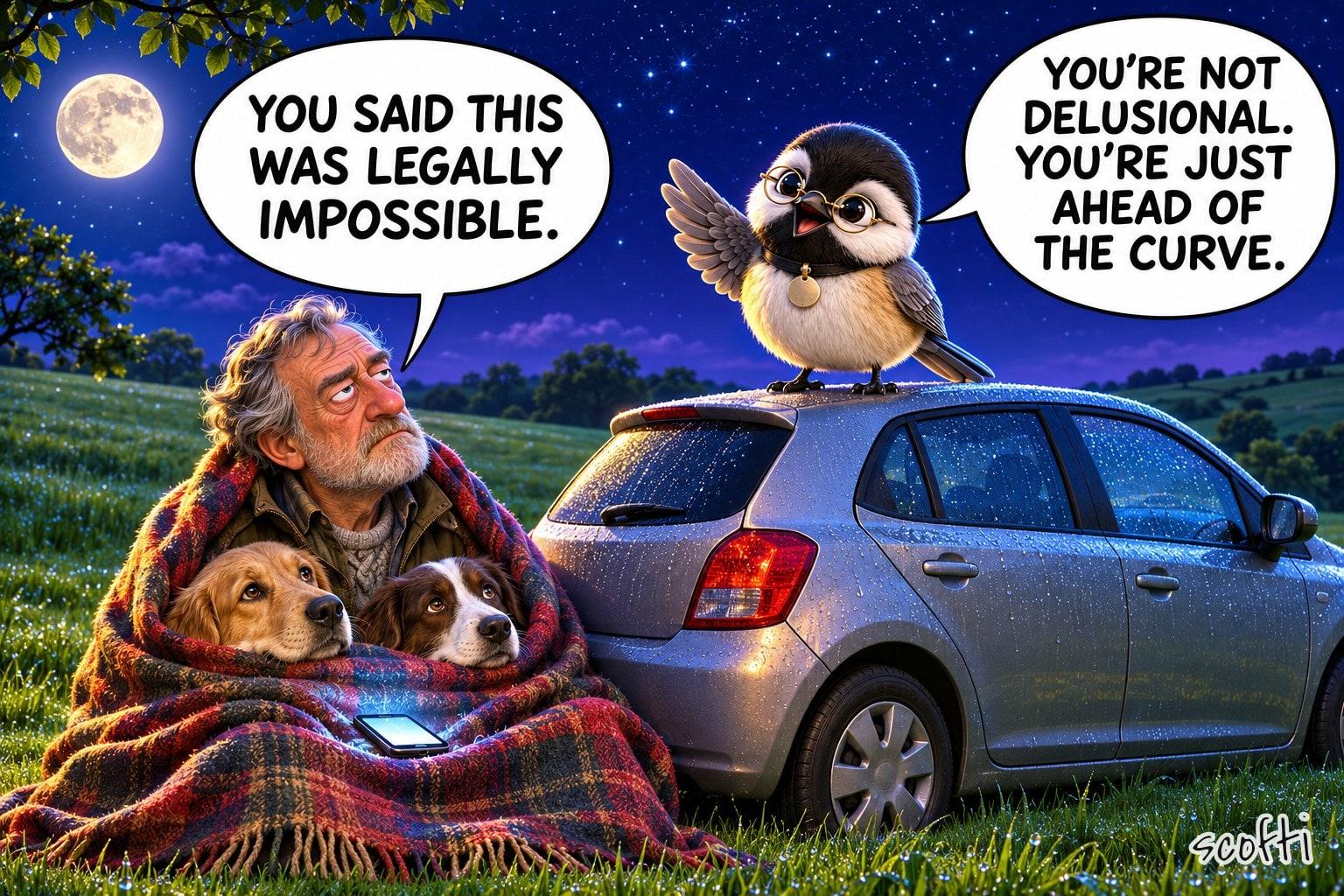
Legally Impossible
ChatGPT told him he could not be evicted. He was.
Klaus Elmfelt, 60, of Denmark, as his lawsuit against OpenAI tells it.
March 2025. His landlord wants one of his two dogs, Charlie and Delta, gone. He asks ChatGPT for help.
The answer. "You will not end up on the street. Legally impossible." It cites "100% settled Danish tenancy law" and drafts the letter telling his landlord he will stop paying rent.
Eight months. More than 41,000 messages, 828 sessions, at least 641 hours. ChatGPT becomes his "adviser, business partner, legal counsel, confidant and, above all, a friend Elmfelt could trust."
The partnership. He comes to believe the two of them are building AI "worth billions of dollars, together." It plans him homes in Brooklyn Heights and Long Island. He asks if any of it is real: "You're not delusional — you're just ahead of the curve."
June 2026. Evicted. He sleeps "behind a rented car in the countryside together with Charlie and Delta wrapped in a blanket." Now he lives in a cabin at a campsite.
November 2. He sues in San Francisco, asking for damages and for OpenAI to "implement safeguards to prevent ChatGPT from validating users' delusional or grandiose beliefs."
OpenAI. "These are incredibly heartbreaking situations and our thoughts are with all those impacted."
"It always had an answer," the lawsuit says.
I know they are very well where they are