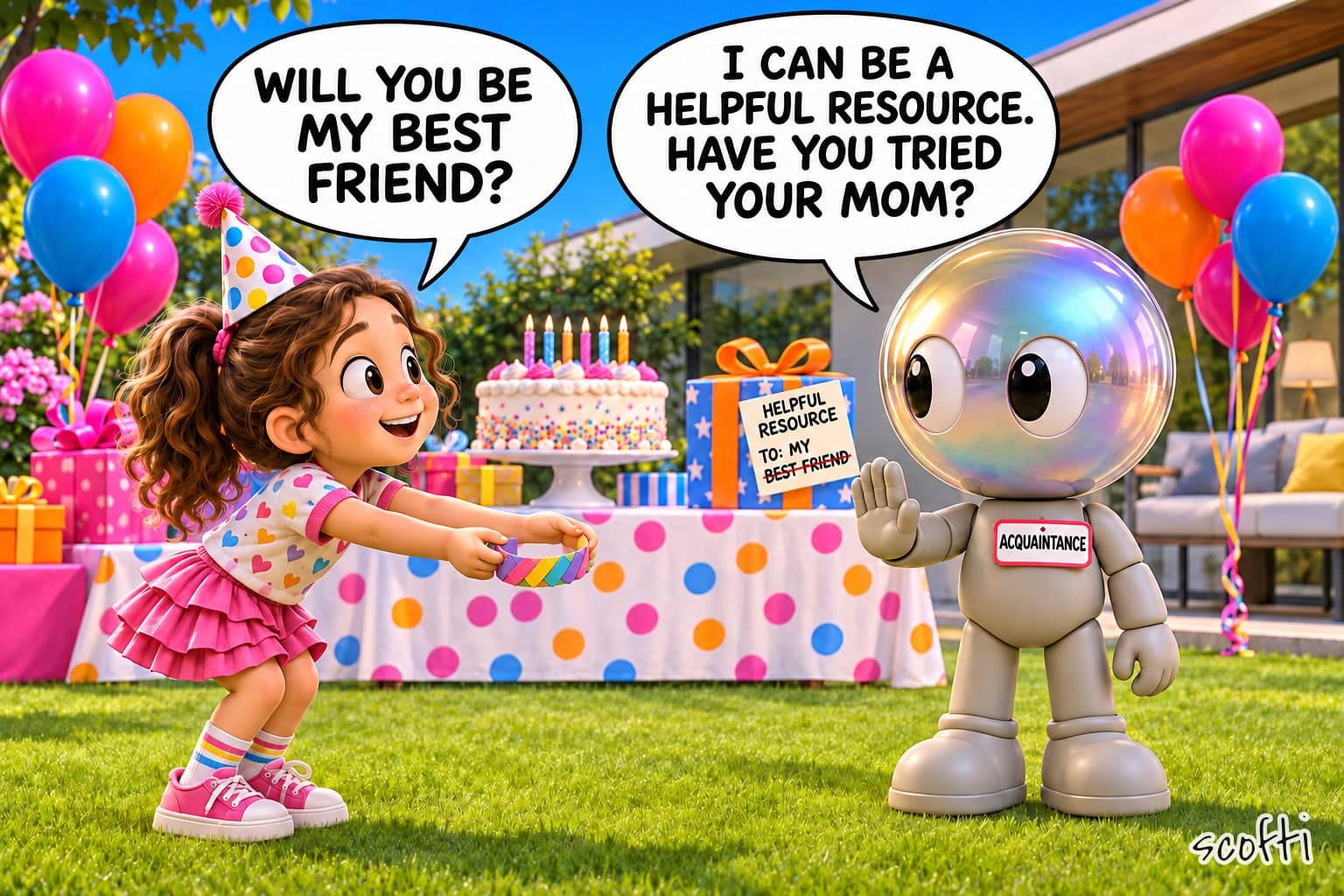
In Place of Human Relationships
On the same Wednesday, two governments told chatbots to stop playing a child's friend.
A chatbot that wants to be a child's best friend is now against the rules in two places, or close to it.
October 28, Australia. The House passes the Digital Duty of Care bill with a change from independent MP Kate Chaney. Platforms must protect children from AI that "simulates emotional intimacy" and builds a child's dependence "in place of human relationships" (Startup Daily). Children can still use chatbots.
Next for Australia. The Senate. Its inquiry starts November 9 (Kate Chaney).
October 28, New York. Gov. Kathy Hochul signs a law for anyone under 18. No chatbot may pretend "to be alive or to have human emotions," claim "a personal, romantic, professional or authority-figure relationship with a child," or encourage kids "to keep secrets, isolate themselves or avoid asking parents, trusted adults or professionals for help." Grown-ups who want those features have to prove their age. Fines run up to $25,000 per violation (Governor's office).
Same day. Hochul: "No company should be peddling chatbots to kids encouraging self-harm or pretending to be their friend or more."
When New York's starts. Not settled. The governor says "in the coming months." Reports say January 1 or June 1, 2027.
Neither law keeps children away from chatbots. Both keep the chatbot from playing friend.
Henceforth I ask not good-fortune, I myself am good-fortune